

What is seasonal colour analysis?
Seasonal colour analysis or personal colour analysis is a service designed to reveal the tones that naturally complement your skin, eyes, and hair. Through expert assessment of your undertone, contrast, and overall colouring, you'll be matched to a curated seasonal palette: Spring, Summer, Autumn or Winter. Each offers a distinct spectrum of shades to enhance your natural beauty. The right colours illuminate your complexion, refine your style, and create effortless harmony in your wardrobe and makeup.
We invite you to explore our bespoke services below. Whether you're seeking an in-person consultation in Brisbane or a fully online experience, we offer tailored options to suit your lifestyle. Gift vouchers, private events, and corporate sessions are also available for those looking to share the transformative power of colour.
 Colour Analysis From$270 aud
Colour Analysis From$270 aud
Colour Analysis From$270 aud
Colour Analysis From$270 aud
Colour Analysis From$270 aud
Colour Analysis From$270 aud
Colour Analysis From$270 aud
Colour Analysis From$270 aud
Colour Analysis From$270 aud


Heres an example of Aimee Lou Wood in something thatworks for her(Left) and something that works against her(Right)
Why it matters?
Wearing the wrong shades for your natural colouring can have a noticeable effect on your overall appearance. Colours that are too cool, muted, heavy, or dusty for your season can drain the warmth and vibrancy from your face, making you appear tired, washed out, or even slightly unwell.
You might notice that your skin looks dull, your natural glow fades, and imperfections such as redness, dark circles, or uneven skin tone become more obvious.
The wrong shades can also create a sense of imbalance, drawing attention away from your natural beauty and toward the clothing itself. Rather than enhancing your features, these colours can overpower or compete with them, making outfits feel disconnected or less flattering. The right colours should feel effortless and harmonious, while the wrong ones can leave you feeling like something is "off" even if you can't immediately explain why.
Colour analysis is especially valuable for professionals and people in the spotlight, helping them appear polished, confident, and camera-ready in colours that enhance their natural features.
How Colour Analysis works!
Colour analysis works by studying your natural features, such as skin tone, hair, and eye colour. The process involves assessing your undertone (cool, warm, or neutral), evaluating your contrast (the difference between your features), and measuring your chroma (how clear or muted your colouring is). These elements together help determine your seasonal palette.
No single feature dictates your season. Red hair, for example, doesn’t automatically make someone an Autumn. Believe it or not, I’ve seen natural redheads fall into Summer categories, even though it’s often debated! That’s why it’s so important to apply not just the theory, but also to truly assess what we see in front of us.


Jesse Williams
4 Med/Low


Margot Robbie
5 Medium


Selena Gomez
8 High
What is Contrast?
Contrast refers to the level of difference between your natural features; your skin tone, hair colour, and eye colour. It's an important element in colour analysis because it helps determine how bold or soft your ideal colours should be.
For example, someone with fair skin, dark hair, and bright eyes has high contrast, and they tend to look best in clear, vibrant colours with strong separation. On the other hand, someone with soft brown hair, light eyes, and medium skin has lower contrast and is more flattered by gentle, blended tones.
We measure contrast by observing the differences between your features when in grey scale (Black & White) As you see in these images. In colour analysis, we look at the lightness or darkness of your skin compared to your hair and eyes, and whether your colouring has strong or subtle definition.
Getting your contrast level right helps you choose colours, prints, and even makeup intensity that naturally harmonise with you—so your features shine without being overwhelmed.


An example of someone with Clear & Warm skin (left) and Muted Cool skin (right).
What is Chroma (Saturation) in Colour Analysis?
Chroma—also known as saturation—refers to how pure and clear, or soft and muted a colour is. In colour analysis, it’s an essential part of identifying your season because it tells us how vibrant or gentle your ideal colours should be.
People with higher chroma in their natural features such as sparkling eyes, glowing skin and deep or bright hair tend to suit bold, saturated colours that are clear and intense. These individuals often belong to seasons like Spring or Winter.
On the other hand, if your features are more delicate or blended (think soft eyes, gentle skin tone, and hair with little contrast), muted colours with a touch of grey—like dusty pink will generally look best. People with these features are usually coded as Summer or Autumn.
Understanding your chroma helps with more than just clothing it also influences what type of jewellery suits you best. If your colouring suits high saturation and you have higher contrast, you may suit shiny or high-shine metals. If you’re better in low saturation, you’ll most likely look best in brushed or matte finishes.
The 12 Seasons in Colour Analysis
Here we have the 12-seasonal colour wheel, featuring Light Summer, Clear Summer, Soft Summer, Soft Autumn, Deep Autumn, Dark Autumn, Dark Winter, Deep Winter, Strong Winter, Strong Spring, Clear Spring, and Light Spring. The brighter, clearer seasons sit at the top of the wheel, while the softer, more muted seasons like Summer and Autumn are positioned at the bottom. Many seasons fall into a more neutral zone, whereas the only truly warm or cool seasons have a sister season within their same category.
It can feel overwhelming at first, so the best place to start is by understanding your own season and then getting to know your neighbouring sister seasons.
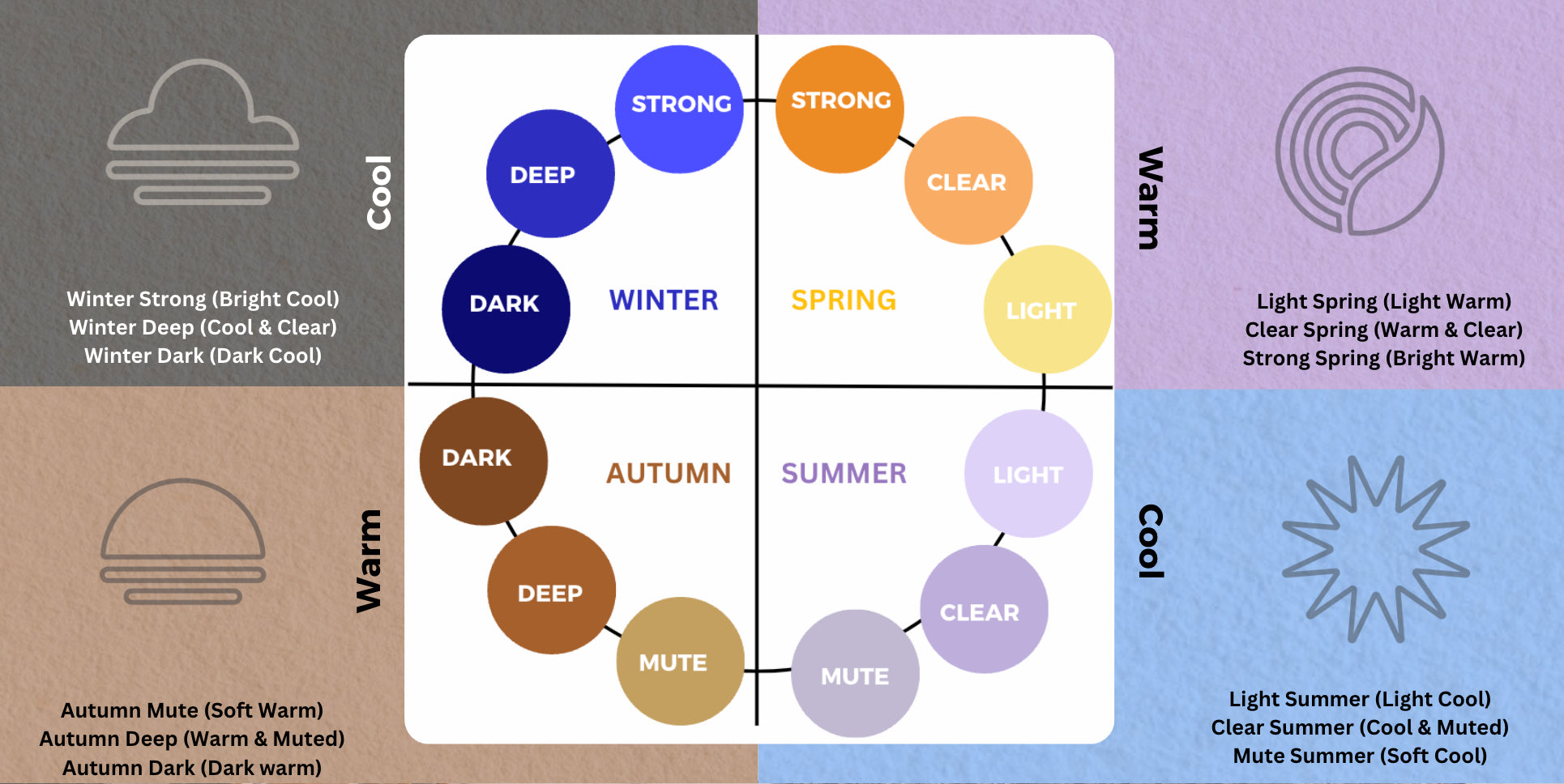


Winter
Winter types in seasonal colour analysis are known for their cool undertones and striking, high-contrast features. This season includes three subcategories: Strong Winter (also called Bright Winter), Deep Winter, and Dark Winter. Winters often have porcelain to olive skin, dark or ash-toned hair, and eyes that are deep or icy in appearance.
Their ideal colours are bold, cool, and saturated, like navy, emerald, plum, and charcoal. Warm or muted tones such as oranges, browns, or soft yellows tend to clash with their cool colouring and reduce their natural impact.


Summer
Summer types in seasonal colour analysis are defined by their cool undertones and soft, delicate colouring. This season includes three subcategories: Light Summer, Clear Summer (True Summer), and Soft Summer (Mute Summer). Individuals in this group typically have light to medium skin with pink or blue undertones, often paired with rosy cheeks and freckles. Hair ranges from light blonde to medium ash brown, and eyes are commonly blue, grey or green.
These types are best suited to soft, cool, and pastel shades like baby blue, lilac, dusty pinks, greys, mauves and lemon yellow. They should avoid warm or bold colours such as bright oranges, black, and rich browns, as these can overpower their cool delicate features.


Autumn
Autumn types in seasonal colour analysis are known for their warm undertones and rich, earthy colouring. This season includes three subcategories: Soft Autumn (Mute Autumn), Deep Autumn, and Dark Autumn. People in this group often have peachy, golden, or olive skin tones with warm, deep hair colours such as chestnut brown, auburn, mahogany, or soft black with golden undertones. Eye colours are typically warm as well, ranging from hazel to golden green, warm brown, or even olive.
Autumns suit muted, deep, and warm tones like olive green, burnt orange, mustard yellow, terracotta, rich brown, and deep burgundy. These tones enhance their natural glow. However, overly bright or cool shades like neon colours, electric blue, or stark white can clash with their warmth and make their features appear harsh or washed out.


Spring
Spring types in seasonal colour analysis are known for their warm undertones and bright appearance. This season includes three subcategories: Light Spring, Clear Spring (also known as True Spring), and Bright Spring (Strong Spring). Springs typically have warm, peachy or golden-toned skin, light golden blonde to medium chestnut or brown hair. They typically have clear eye colours such as green, green-blue or golden hazel.
They look best in clear, warm, and lively colours like coral, peach, sunflower yellow, turquoise, aqua, and lime green. These shades reflect the blooming flowers and sunlight of the actual season that is 'spring'. They should avoid dark, muted, or cool tones like deep burgundy, grey, or icy blues, which can dull their brightness and natural warmth.
FAQs
Yes! Our online colour analysis allows you to submit high-quality photos and detailed information to receive a personalised colour analysis from anywhere in the world. As long as you provide the correct photos, your results will be just as accurate as an in-person session.
After your session, you’ll receive a comprehensive PDF report detailing: Your seasonal palette. Over 100 of your season's colours. Styling tips tailored to your palette. With our premium analysis, you’ll also receive makeup, nails and hair recommendations. Physical swatch cards can be purchased separately for your convenience or document upgrades from standard to premium booklets. Additionally, seasonal colour guides can be purchased individually for those that have had an analysis elsewhere and would like additional information.
Absolutely! Colour analysis is for everyone aged 18 and above. It helps men make informed choices about their clothing, accessories, and professional attire. In fact, one-fourth of our clients are men, although they often prefer not to feature in video testimonials.
Please arrive with: No makeup. No earrings. Clear contact lenses (if you wear glasses, where possible).
In-Person Sessions: - Typically 1 hour for a Standard Analysis - 1-2 hours for Premium Analysis - For two people between 2-3hrs Online analysis: Results are delivered within 14 days, depending on the review process and how promptly you submit approved photos. Urgent colour analysis are delivered 72 business hours after photos are submitted and approved.
Not at all! Colour analysis helps you make more informed choices moving forward. You can integrate your best colours into your existing wardrobe through accessories, layering, or makeup. Any wardrobe changes happen at your own pace, if you choose to make them.
While your undertones remain consistent, changes in hair colour, aging, or lifestyle may influence your overall appearance. A refresh session is recommended, particularly around the age of 65. Colour analysis is not recommended for individuals under 18, as hormonal changes can impact results.
Absolutely! A colour analysis session makes a unique and thoughtful gift. Simply purchase a gift voucher and I’ll create a personalised PDF voucher, sent via email within 48 hours. The recipient can then contact Your SZN to book their session.
Colour analysis is an intimate and personal experience. For this reason, I kindly ask that children not be brought to the session. If you wish to bring a guest, please contact me in advance. Alternatively, you can book a colour analysis session for up to 4 people.
Do you offer colour analysis in Sydney? We offer virtual colour analysis for our Sydney clients, upload your questionnaire and photos and get your results all from the comfort of your home.


FOLLOW US
On Instagram
Tag @yourszn.brisbane in your Instagram photos for a chance to be featured here.